
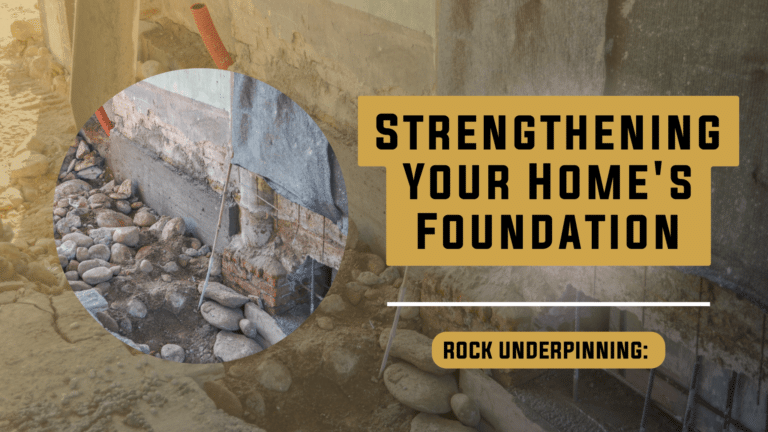
River-rock foundations are found beneath some older Los Angeles homes. Rounded stone, irregular mortar joints, shallow footings, later concrete additions, and decades of moisture or seismic movement can create conditions that differ from modern reinforced concrete. “Rock underpinning” should mean a structural repair designed for the actual foundation—not decorative stone placed around it.
What Is a River-Rock Foundation?
These foundations may use locally available stone laid in mortar as perimeter walls or supports. Construction varies widely by era and builder. The shape of rounded rock can limit bond, and many older assemblies contain little or no modern reinforcing.
Warning Signs
- Loose stone, missing mortar, or crumbling joints
- Bulging, leaning, or displaced wall sections
- Cracks continuing into framing or finishes
- Water staining, soil erosion, or damp crawl-space conditions
- Separation between original and later concrete work
- Uneven floors, sticking openings, or shifted posts
- Previous coatings or patches hiding deterioration
Inspection Priorities
A foundation inspection should trace the load path, document wall condition and thickness, review connections to the framing, check floor elevations where appropriate, and inspect drainage, soil, additions, posts, piers, and prior repairs.
Possible Repair Approaches
- Compatible masonry repair: for localized stable deterioration where structural capacity remains adequate.
- Sectional reconstruction: replaces failed areas while the structure is supported.
- Sister foundation: constructs a new reinforced element alongside an existing foundation where suitable.
- Underpinning: improves bearing below selected areas when settlement or inadequate support is present.
- Foundation replacement: may be considered where deterioration or deficiency is widespread.
- Drainage correction: addresses water contributing to erosion or mortar deterioration.
Repair selection requires site-specific engineering and construction sequencing. The Los Angeles Municipal Code’s adjoining-property and underpinning provisions address support and excavation safeguards for applicable work.
Retrofit Is Not the Same as Repair
Seismic anchors and cripple-wall bracing improve connections, but they do not replace missing mortar, restore failed bearing, or correct active settlement. Deteriorated foundation material may need repair before retrofit hardware can perform as intended.
Permits and Contractor Questions
Confirm requirements with LADBS. Ask what conditions were observed, how loads will be supported, whether the scope is repair, sistering, underpinning, or replacement, and who is responsible for engineering, permits, inspections, drainage, and finish restoration.
Request a Site-Specific Evaluation
NE Construction & Design evaluates foundation, concrete, drainage, and structural conditions throughout Los Angeles County.
Request a consultation to discuss the property and project scope.