
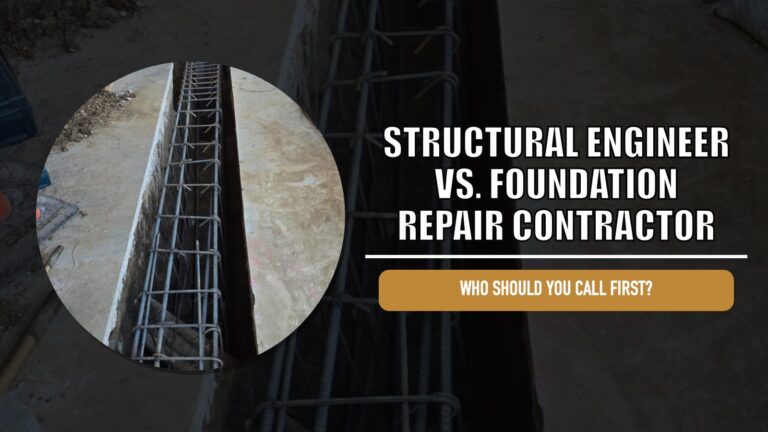
Call a licensed engineer first if you need an independent opinion about what is causing the movement, whether it affects the structure or whether a repair needs design. Call a foundation repair contractor first if you already have a defined scope and need to know how the work would be done and what it would cost. When the cause is unclear or proposed fixes differ substantially, get the engineering question answered before committing to construction.
Compare the roles before you book a visit
Choose the first call based on the decision in front of you. If you need to understand an unresolved structural concern, ask for an evaluation with a defined question and written findings. If you need a price on a defined repair, ask for a construction proposal that identifies what the crew will build or install. Here is what each professional can help you clarify.
| Your question | Engineer’s role | Contractor’s role |
|---|---|---|
| Why have several areas changed? | Evaluate the structural question, explain the evidence and identify limits or additional investigation. | Describe visible conditions, access and available repair methods for a proposal. |
| What should the repair accomplish? | Define the intended structural outcome and, if retained for design, prepare applicable details or calculations. | Explain how the agreed work could be carried out, including access, sequence and exclusions. |
| What will the work cost? | Clarify which areas or design elements should be included so bidders price the same scope. | Provide a written proposal that identifies quantities, responsibilities and costs. |
| What if the crew uncovers something different? | Evaluate the unexpected condition if it affects the design or conclusions and advise whether revisions are needed. | Document what was found and explain the construction and cost implications before proceeding. |
| Who handles inspections and records? | Specify any engineering observations or documentation included in the engagement. | Confirm who coordinates required inspections, keeps records and provides closeout documents. |
In California, the state engineering board grants authority to use the title Structural Engineer to qualified licensed civil engineers. When seeking engineering help, ask what credentials and experience suit your project and confirm who will take responsibility for the work. For the contractor, verify that the license and experience fit the proposed construction. Ask both parties to describe what is included before you hire them.
When to call an engineer first
Consider an independent engineering evaluation when several symptoms appear together, there is a history of repairs you cannot verify, or two contractors recommend substantially different work. You can ask the engineer to evaluate an area of concern, explain what the evidence supports and identify what further investigation, if any, is needed. If repair design is needed, ask whether drawings or calculations are included in the engagement or require a separate scope.
Before hiring, ask who will perform the evaluation, who will take responsibility for the conclusions and what you will receive in writing. When independent advice matters, ask whether the evaluator has a financial relationship with anyone bidding on the repair. Check the individual’s California license using the state engineering board’s license lookup.
When to call a foundation repair contractor
A foundation repair contractor can assess construction access, explain methods within their scope and prepare a proposal for the work. If you already have a repair design or a written scope, send the same documents to each bidder. Ask who will handle permits and inspections where required, what is excluded, and how changes will be documented if hidden conditions are discovered.
When the scope is still uncertain, a contractor can explain what they see and what they would propose. Before accepting a proposal, check whether it assumes a cause that has yet to be confirmed. The California Contractors State License Board’s hiring guide explains how to verify a contractor’s license and compare written bids for the same scope.
Four homeowner situations and whom to call first
Uneven floors and an old invoice with no clear scope. You know a prior repair happened, but you cannot tell what it addressed. An independent engineering evaluation can help identify which findings affect the structure and whether the earlier work matters. Share the invoice, dated photos and any available plans. Ask whether the proposed visit includes a written opinion and what could require further investigation.
You have a written repair design and need prices. Start with contractors who have experience carrying out that type of work. Give each bidder the same version of the design and ask for the same breakdown. For instance, ask whether each bid includes access through the same part of the property, debris handling and restoration. If a bidder proposes a design change, take that question back to the responsible engineer before comparing the totals. Our foundation repair estimates guide walks through the bid comparison.
The inspection describes movement but leaves part of the crawl space unobserved. Start with the person who wrote the report. Ask whether opening that area could affect the recommendation, who should arrange access and what they need to see. If the remaining question is structural, book the appropriate evaluation before asking bidders to price an assumed fix. If the inspection already identifies a clear construction scope for the affected areas, ask which parts can be priced while the open question is resolved.
The contractor found something different after work began. Ask for photos, a description of the location and a record of what differs from the drawings or bid. If the finding could affect structural work, ask who will obtain the engineer’s review. Request a written explanation of the revised scope, price and timing before approving extra work. This keeps the design decision and the construction change tied to the same facts.
What to do when you need both
Start with the open question. Suppose one proposal recommends supporting a section of the house and another recommends drainage work. Ask an independent engineer which observations support each explanation and whether more information is needed. That lets you compare proposals once the underlying problem and construction scope are clearer.
Share the same documents. Give the contractor the relevant report and any drawings. If access constraints or hidden conditions call for a change, ask who will review it and whether the design needs to be revised before work proceeds.
Keep the paperwork together. Save the findings, approved scope, proposals and any permit records. If you already have written findings, use our foundation inspection report guide to identify what was observed, what remains uncertain and which decisions the report supports.
Confirm what happens between the engineering visit and construction
Get a deliverables list. A site evaluation, written findings, drawings for a permit, a response to plan review and a construction observation can be separate services. If the engineer proposes an initial visit, ask which decisions that visit can support and how any later work will be scoped. If a contractor says engineering is included, ask who provides it, who gets the reports and whom you can contact with questions.
Ask how instructions will reach the crew. For example, if an engineer issues a revised detail, confirm who sends it to the contractor and who checks that pricing and the planned work reflect the current version. For permitted work in Los Angeles, check who will coordinate with the building department and keep the inspection records. The Los Angeles Department of Building and Safety inspection guide explains the building department’s role.
If the same company offers evaluation, engineering coordination and repair, ask how those services are arranged. Find out who is contracting with you, who pays the engineer, and whether you can obtain the written findings before deciding about construction. If you want a second opinion, give the independent professional the original records and ask a specific question, such as whether the proposed scope addresses the observed movement. A focused second opinion can help you decide whether to seek more information, revise the scope or ask contractors for comparable bids.
First-call checklist
- Write your main question. Decide whether you need an evaluation, a defined repair design or a construction proposal.
- Note what changed. Record the location, when you noticed it, and whether you have dated photos or past measurements. Share any earlier work on the same area.
- Describe the site and access. Mention crawl-space openings, finished rooms, limited access and any other conditions that could affect the visit.
- Send the same records. Provide the latest report, relevant photos and applicable plans so everyone works from the same information.
- Ask what will be in writing. Confirm who will visit, what you will receive, what is excluded and whether a follow-up is priced separately.
- Agree on the next handoff. Ask who answers remaining questions, who should receive revised documents and what you need before deciding whether to hire a contractor.
When you call, try: “We noticed the floor change near the rear bedroom, and we have an inspection report but no repair plan. Can you tell us what your visit would answer and what we would receive in writing?” If you already have a design, say: “Can you price this version and show what is included for access, restoration and inspections?”
What to say when you make the first call
Describe where you see the issue, when you first noticed it and whether it has changed. Mention any known repairs, water problems or access limits. Then say which decision you need help with: understanding the cause, developing a repair design or pricing a defined job. If you see sudden major movement, failing supports or other immediate danger, keep people clear of the affected area and seek urgent local help.
If you own a Los Angeles-area home and want to discuss a site visit, see NE Construction & Design’s foundation inspection service. Share any existing reports and ask what the visit can cover and when a separate engineering opinion may be appropriate.